What types of materials are banners made of?
This is a good question and is quite simple on the surface, although there are many variations within each category.
The two main categories of banner materials: vinyl (PVC) and fabric or cloth banners. That's the easy answer.
However, it is helpful to know the variations within each category, so I'll start with the vinyl banner category first, as it's simpler, I think.
First off, PVC or vinyl banners come to us as roll stock, and we either screen print (becoming less common), or digitally print these banners on a wide format digital printer.
There are several weights available, the most common being (at least in our shop) 10 oz., 13 oz., 15 oz., and 18 oz. The ounces refers to the weight of the banner per square yard of material. The heavier the weight, the more durable, although installation methods are often of utmost importance in the life of any outdoor vinyl banner.
With these materials, most are also available with a block-out layer between the sides that allows us to print both sides of the material without having a shadow show through the back side.
Another type of vinyl banners is the mesh vinyl banner, which is a perforated material that is printed with a backing sheet on it to prevent ink from spraying all over the printing platen on the digital printer. This material allows a certain amount of wind to pass through it, thus reducing the wind load from 10 to 20% on average.
The second main category is fabric banners, which are most frequently made using polyester, nylon, or other synthetic fabrics. Most of these banners are currently printed using a printing method called dye sublimation printing.
Some street banners and cloth banners are also screen printed if the volume of printing justifies setting up the screens to do so, or the print shop specialized in street banners created by screen printing.
Dye sublimation digital printing of banners is one of my personal favorite advertising graphics to sell. It is very classy compared to vinyl banners, so much so that they have taken over the high end trade shows as the banner of choice, at least for companies that don't want to appear cheap.
The dye sub print process uses heat and pressure to transfer the CMYO print from the transfer paper to the synthetic fabric itself. Over the past few years, digital direct to substrate dye sublimated printing has started to take over the fabric banner industry because it has less steps involved in printing a banner using dye sublimation that the heat and pressure method. I.e., it's faster and cheaper to produce, so many printers are switching to this type of printer for those reasons.
Within the fabric category, the main differences you'll find is in the materials. There are dye sublimate printed satin fabric banners, stretchy fabric banners (polyester with Lycra or the like), outdoor polyester banners, acrylic banners, and nylon banners. There are polyester fabrics that are sheer, look like cotton, or any number of variations.
So, as you can see, there are many options for printed fabric banners available, whether they use the traditional dye-sublimation printing method or the DTS (direct to substrate) printing method. Or screen printing. Lots of ways to produce a fabric banner, and for interior use, I personally would almost always recommend dye sub printed cloth banners.
Follow Us:
Finding the right look for your baseball team this season doesn’t need to be difficult. With just a few easy tips, we can have your players looking like the pros this year, and then all you have to worry about is winning the game.
The answers to these questions can make the selection process quite easy. For younger players, think pre-Little League, cotton team t-shirts may be the best option. Add a matching color baseball hat in your team color to complete this uniform. At the end of the season the players can keep their tees as a memento and then move onto the next level the following year.
The young generation is very much inclined towards fitness and sports activities. People interested in sports activities prefer to play the respective sports in the proper sportswear. The sportswear is made up of polyester fabric as they could be sublimated according to the sports' requirement. Sublimation is a process that is used to transfer a colored graphic on to the polyester fabric. The sublimation process simplifies the working procedure but on the other hand also has some drawbacks alongside. The sublimation printing is not advisable on cotton fabric and garments as the print, graphic or image will get washed away after few washes.
Process Of Sportswear And Uniforms Sublimation:
The sublimation process is simple as it does not require bulk number of steps and gives excellent printing on polyester fabric. The designs provided by the customer are the same is designed on computer using some advance version of graphical design software. The graphic, image, etc., gets high quality look as the printer cartridge has sublimation ink.
After the print of the image, graphic, etc., heat press is used to transfer the same quality image on the Sportswear and Uniforms. The extensive heat converts the dye sublimation ink into gaseous form and gets penetrated on the fabric. Features like durable finish, elegant look, and colorfastness has also made the sublimation process ideal for making Sportswear and Uniforms. The sublimation equipment is compact thus, the result are very much professional and is also considered at international level.
One thing all of these teams can agree on is that their players demand the highest quality uniforms that fit within their budget. You can find: professional-quality, full-button jerseys, game-ready pants and fitted caps at a price that works for your team. Along with high quality uniforms, we offer the largest selection of team colors and decoration options, making it simple for every team to design the perfect uniform for the upcoming season. You can upload your own custom logo or artwork into our online designer and create a custom look all of your players will love to wear. Designing your new jerseys and caps is easy and can be done in just a few minutes.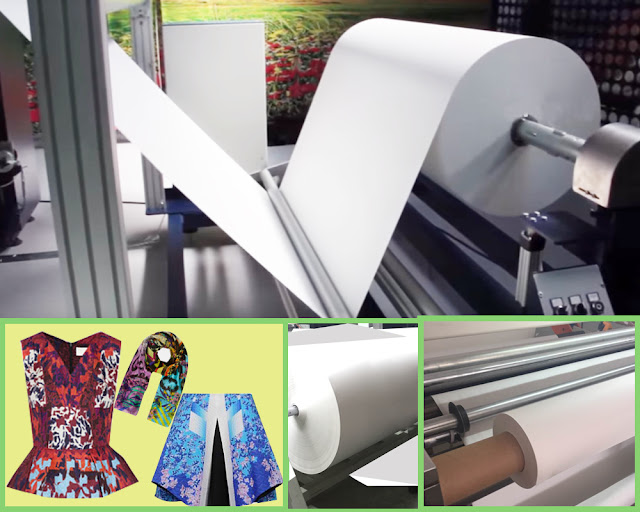
Features Of The Sublimated Clothing:
The Sublimation Sportswear and Sublimation Uniforms are widely demanded in the markets of Australia, UK, USA, etc. The Sublimation garments vibrant, glossy, scratch resistance, etc. These features have also made the sublimation printing ideal for various promotional clothing as well as products. Moreover, Sublimated Clothing is one of the very popular gift for the sports lovers. All it takes is latest sublimation printer, excellent quality dye sublimation inks, sublimation printing paper and hot press.
The sublimation dye ink is used to print on polyester and polyamide (lycra, nylon) fabrics. These are common fabrics used for sportswear and outerwear along with mixed synthetic fabrics with a minimum 60% synthetic fibers. Sublimation Paper is ideal for sportswear because the ink does not sit on top of the fabric. 
Facts About Sublimation Printing:
• The sublimation technique is the modern technique, so invented from all the other techniques like thermal printing invented in 1970s.
• There is no barrier in types and complexities of the drawings and logo printing of the uniforms and sportswear. The method helps in infusing the print on the respective fabric.
• As there are various benefits and countable features, the technique is expensive and that adds a drawback to the technique.
In market, one can easily find manufacturers, who are highly appreciated in the local as well as international market for providing professional Sublimation Sportswear and Sublimation Uniforms. The expertise of the manufacturers helps in the making the availability of customized Sublimated Clothing in specifications provided by the potential buyers and at the market leading prices. The manufacturers have to install all the advance facilities in their infrastructural premises in order to reduce the extra charges. Some also incorporate units like warehousing and packing to avoid any other additional charges to the total cost being invested.
Follow Us:
If by laser printing, they were referring to inkjet printing, the answer would be partially yes, but it's a bit more complicated than that.
Inkjet printers are generally known to print such items as vinyl (PVC) banners, vinyl stickers, and even fabric that has been treated to accept ink. However, this is not dye sublimation printing, or dye sub printing for short. Dye sub printing, as stated within the name, uses dye, not ink, a subtle but meaningful difference as they have completely different functions.
Four color process inkjet printers as noted above use the common printing designation of CMYK printers. C is for cyan. M is for Magenta. Y is for Yellow. And K is for black (not sure why this is, but it is what it is). The combination of these four colors, when applied by the printer in a certain order (I believe yellow prints first, then magenta, then cyan, and finally black), will create full color prints on whatever substrate is being printed at the moment.

In contrast, or at least partial contrast, the dye set use in an inkjet printer is different because it is dye, not ink. The four color process (4CP for short) printing when a dye set is used in an inkjet printer is a bit different. One thing to note as well, here. While the same printer is used to print inkjet inks and dye sublimation dyes, one cannot simply switch ink sets for dye sets without a complete flushing of the printer, so most printers don't switch between printing ink or dye because it is a labor intensive operation and would waste a lot of time.
At any rate, the dye set for dye sub printing is CMYO. C is still cyan, and M is still magenta, and Y is still yellow. But O stands for overprint clear, which still turns black during the heat transfer step of dye sublimation printing.
So, to explain the difference between inkjet printing in basic terms compared to dye sublimation, in inkjet printing you load up a roll of vinyl banner material and send the print. The ink is dried on a heated platen, or with a UV light just behind the printed graphic on the substrate, then it rolls up on the take up reel, and it's done. If you're printing decals that need die cut, some printers also contain a plotter that will also do this part, but many don't, so marks that can be read by a vinyl plotter are printed, then read by an "eye" on the plotter, and cut to size. That's an oversimplified version, but you probably don't need to know every step in that process.

In comparison, with dye sublimation, first the printer prints a mirror (reflected/backwards) image of the desired image on a treated paper known simply as "transfer paper." Once the paper has been printed, it is matched up to an appropriately sized piece of polymer-based fabric, typically a polyester material of one style or another (from sheer to satin to knit to canvas, etc.), and run through heated pressure rollers at about 375 to 400 degrees Fahrenheit.
This is where the heat transfer of the dye occurs. As the transfer paper heats up, the dye is transformed into a gas, and the pores or cells of the polymer-based fabric expand and open up. The dye is forced into the open pores by the pressure of the rollers, and as the fabric passes beyond the heated rollers, the cells rapidly close, trapping the dye inside the cells of the fabric, creating a beautiful continuous tone print, with colors typically more vibrant than what can be achieved with straight inkjet printing to fabric or vinyl.
There are many similarities, as you can see, between inkjet and dye sub printing, and even some of the equipment is interchangeable, but they are definitely NOT the same thing. And the results of sublimate printing of polyester fabrics can create beautiful posters, banners, or displays that can make anything you're promoting look better than you thought it could.
Follow Us:


